Research peptides · Profiles, evidence, open analytics
Research.Precision.Results.
Four peptides that keep researchers busy. Each with a profile and a classified evidence overview, every released batch with a public test report. For research use only.
One vial, one batch,
one report.
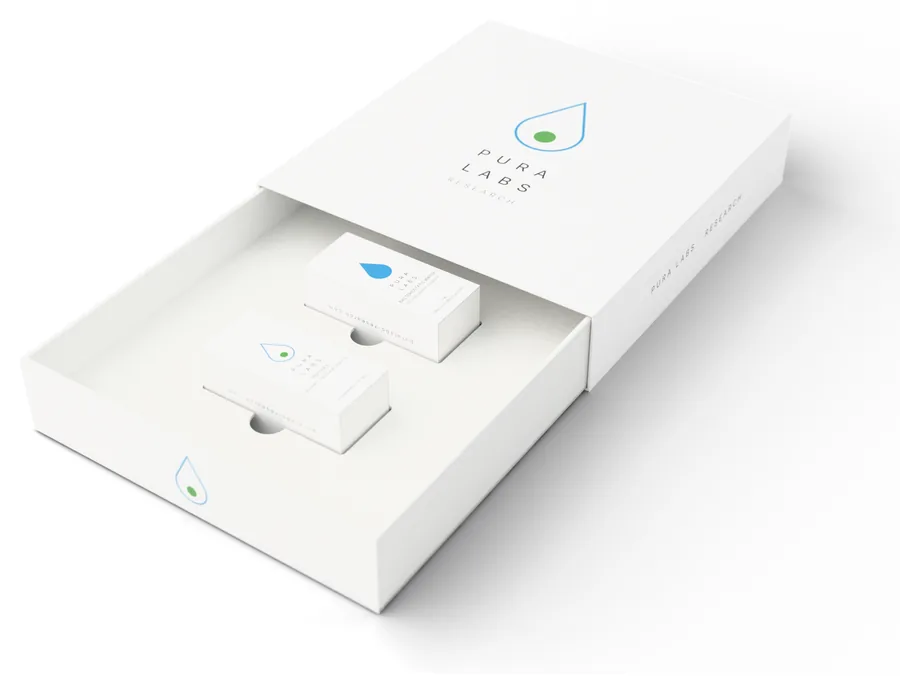
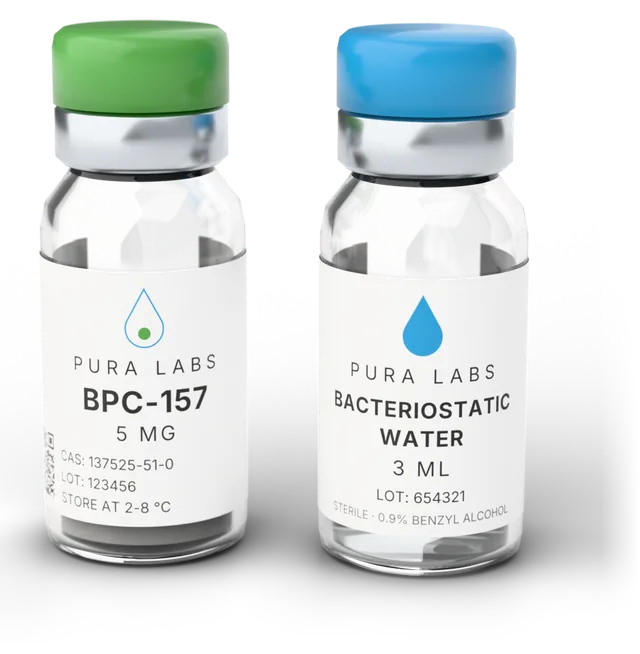
Each peptide comes as a lyophilisate in a glass vial, in its own carton, together with bacteriostatic water in the drawer box. Every label carries the lot number that leads to the test report.
- 01Lyophilisate in a vial. Freeze-dried, sealed, to be stored refrigerated. Amount and CAS number are printed on the label.
- 02Two cartons, one box. Peptide and bacteriostatic water sit in separate cartons. No syringes, no accessories for use.
- 03Lot number and QR code. Both lead to the batch report: chromatogram, mass spectrum, specification, testing laboratory.
Four peptides.
Four fields of research.
A tissue peptide from gastric juice, a copper complex from plasma, a messenger from the mitochondrial genome and a tetrapeptide from pineal gland research. What they share: an unusually active research literature.
BPC-157
Stable gastric pentadecapeptide
A 15-amino-acid fragment of a gastric juice protein that has been studied unusually broadly in animal models. One of the most discussed research peptides, with an evidence base that is almost entirely preclinical.
GHK-Cu
Copper tripeptide from human plasma
A naturally occurring tripeptide that binds copper(II) and whose plasma concentration declines with age. Studied in cell culture and animal models since the 1970s, particularly well documented in skin research.
MOTS-c
Mitochondrially encoded peptide
A 16 amino acid peptide whose blueprint lies not in the cell nucleus but in the mitochondria's own genome. Since its discovery in 2015, a model for the question of how mitochondria help steer the metabolism of the whole cell.
Epitalon
Tetrapeptide from pineal gland research
Four amino acids, designed after a peptide extract of the pineal gland. Known for findings on telomerase in cell culture and for long-term studies in mice; the literature still comes predominantly from one research group in Saint Petersburg.
What the literature says,
and what it does not.
We classify every paper by type of evidence. A finding in a rat model is not a finding in humans. A registration trial of a medicine says nothing about a research chemical.
Multifunctionality and possible medical application of the BPC 157 peptide: literature and patent review
Literature and patent review of the pentadecapeptide BPC 157. The data evaluated come predominantly from preclinical models; the authors stress the lack of clinical evidence.
MOTS-c is an exercise-induced mitochondrial-encoded regulator of age-dependent physical decline and muscle homeostasis
MOTS-c improved physical performance in young, middle-aged and old mice, even when treatment began late in life. In humans, the endogenous peptide rose in muscle and blood after exercise.
Stable gastric pentadecapeptide BPC 157 and wound healing
Review of findings on BPC 157 in wound models (incisions, burns, diabetic ulcers) in rats and mice; mechanisms via the NO system and angiogenesis are discussed.
We do not sell promises.
We publish what we know.
PURA LABS supplies research peptides with a profile, a classified evidence overview and complete analytics. For research use only, not for human or animal use. More on labelling